There is power behind owning the medium—
Social media is designed to control its users.
Social media is a staple of the internet. The idea is very simple—a trait shared with many influential ideas—so once it began to grow as a concept, the potential energy of the industry skyrocketed.
The easiest way to prove this is with the inception of Facebook in 2004. Young Mark Zuckerberg was commissioned to create a social website for a few other Harvard students. After realizing the potential of the idea, he stole and used the idea for himself.
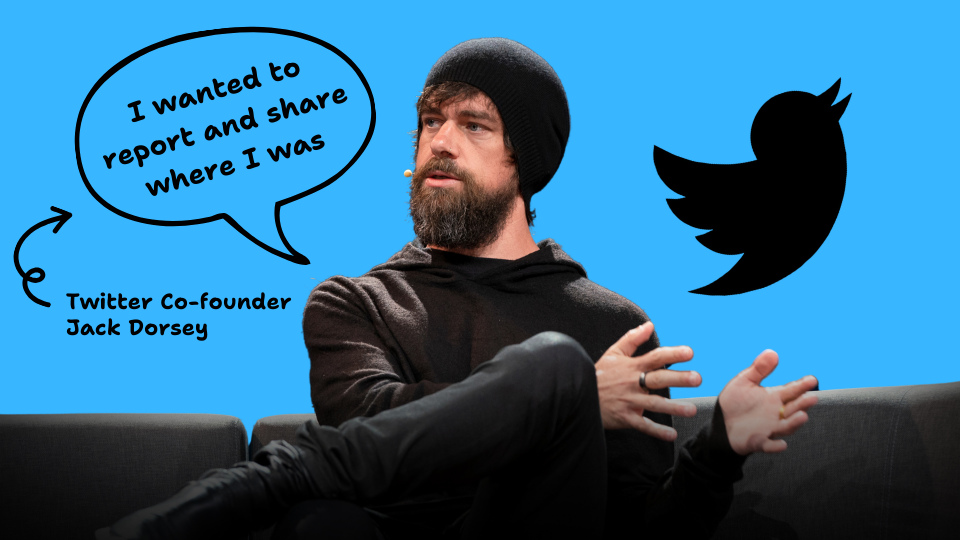
Twitter founder Jack Dorsey stated in a 2009 interview that he had thought of the idea because of his enjoyment in instant messaging with his friends, telling the interviewer: “I wanted to keep my friends in my pocket at all times” (“Jack Dorsey” 1:31). His efforts created a way to globalize the simple action of sharing a message with a group of friends, but instead of friends, it was the entire internet. Social media wasn’t inherently a way to profit off of the instant gratification that comes with being in a social network. However, that was the outcome.
Since then, social media has flourished into a key necessity in most people’s day to day lives. While it’s true that its prevalence has greatly influenced people’s lives for the better through community, it is equally true that it has ripped people apart both physically and mentally.
The American Public University published a paper on how social media affects society, which outlines a few points that would act as a good context for the rest of this article. The paper explains how social media acts as a great creative outlet, supercharges social networking, as well as serves as a platform to raise social awareness to a larger crowd. The positives aside, it would be a disservice to not mention the commonality of cyberbullying, hate speech, exploitation, and most commonly, addiction (Ashar).
Social media addiction isn’t an accidental side effect, it’s very much intentional. That’s where the money is. Let’s compare it to a traditional brick and mortar store. Let’s say that you are a customer walking into a mall. All of the mall’s stores are competing for your attention with their deals and apparel. The stores, in this scenario, represent websites—social media—on the internet. Once you choose a store, that store now has the goal of keeping you in the store for as long as possible. This can be done by constantly stimulating the customer through several means. Social media achieves this through social validation, endless feeds, and an onslaught of dopamine-riddled actions that tie you to the tracks of a social hype train.
Dopamine and social media, you are now probably not asking yourselves—how preposterous! Well, you may or may not be surprised that there is real merit in the correlation between the two. A paper by King University mentions that “when social media users receive positive feedback (likes), their brains fire off dopamine receptors.” This was further backed up by a study they cited that used “MRI technology to monitor brain activity” of adolescents and found “viewing photos with many (compared with few) likes was associated with greater activity in neural regions implicated in reward processing, social cognition, imitation, and attention” (King University). The people’s brains have spoken and they love “loves.”
But how do platforms actually fuel addiction? Here’s a handy step-by-step guide on how to control your users. The fear of missing out, or FOMO, is probably the most common way to emotionally manipulate your users, and it’s not even that difficult to cause. All you need are a few users and a way for them to share what they are doing at any given time. You know what’s even better? Why not allow users to pay for higher numbers through means of repetition?
Introducing streaks: the trendy new social currency. The University of Delaware’s Andrew Sharp shared about the effects of them and it’s interesting how much of a double-edged sword they can be. On one hand, “think of apps like Duolingo, which trumpets user streaks to keep people disciplined with learning a new language” (Sharp). Streaks as a motivator is fairly effective until you lose said stream. If you were to make a relational graph between streak number and stress, it would be almost exponential, as the longer you go the more you have to lose.
“‘On the flip side, what we find is that when people break their streaks, that is especially demotivating, because not only have they missed out on some behavior that they like doing that they’re tracking, but they also now have failed in the goal of keeping their streak alive,’” says Jackie Silverman, a researcher interested in the concept, who was referenced in the article (Sharp).
Streaks, when broken, can act as a wonderful demotivator, and that’s how they get you. Social media has realized that they can sell the cure to their own disease and make money. Streak restorers can be bought in several contexts and have found a way to profit off of their most loyal users, leaving them in a state of not having any choice.
Now is a good time to switch gears a bit and get technical. Design. It’s what builds trust, what builds familiarity. Good design on its own can move a user to do what the designer wants. User Experience, commonly shortened to UX, is a primary factor that designers and developers consider when creating an app, or in our case, a social platform. Using my history in this sort of thing, I analyzed the Twitter UI to break down what makes it effective, and here’s what I found.
The layout of the app in its heyday was very thought out, due to their large amount of feedback they have collected from their users. Figma user “Pixsellz” did us the honor of recreating the Twitter mobile design and posting it, which makes it easy to pick apart. When designing for mobile, it’s important to design for use in one hand, as most people use their phones using one hand because phones are small. Because of this, when designing for mobile you want the important stuff to be within reach of your thumb. Twitter’s UI is designed to put the new tweet button in the bottom right-most corner (Pixsellz). The rest of the bottom bar consists of links to all of the main pages for ease of access.
Let’s run that all back real quick to tie it all together.
Social media started as a way for one to share what they are doing with the world. After the mental effects of it were noted, it became weaponized both intentionally and unintentionally, to get not only the most money out of the user, but also the most time. Retention is the new currency and social media is a cash cow for it. The social platform that wins over the most money may win the fight, but the one that wins over the most eyes, wins the war. In order to get these eyes, the platform first needs to streamline the process to the absolute maximum. The more intuitive something is to use, the more people will use it. Not only does it need to be intuitive, but it needs to be efficient. Efficiency is achieved when the network is able to implement as many forms of FOMO as possible while still being able to have a streamlined UX. We are under the influence of constant persuasion where the only way out is to be left out.